 Printwear & Promotion The Total Promotional Package
So you want to get into DTF? Despite perhaps now playing catch-up, it is not a decision to take lightly. As Charlotte Darling, director at Amaya Sales UK explains, there are many factors you need to consider before taking the plunge.
 For many garment decorators, DTF has become one of the most practical ways to add flexibility to production. It enables detailed, full-colour transfers across cotton, polyester, blends, workwear, sportswear and promotional garments, often without the set-up time or minimum quantities associated with traditional decoration methods.
As the market has grown, so has the number of equipment options. Desktop printers, converted systems, industrial machines, expanded-colour models and complete print-and-finish workflows are all competing for attention. For businesses making a significant investment, the challenge is not simply finding a DTF printer, but selecting equipment capable of meeting real production demands.
Reliability before speed
Reliability should be the priority when choosing DTF equipment. Fast print speeds only matter if a machine can deliver consistent results day after day.
A printer that requires frequent cleaning or adjustment soon becomes expensive, affecting productivity, delivery schedules and customer satisfaction. This is why systems from established manufacturers continue to gain traction. Many are now operating for extended production hours, giving businesses confidence they can support continuous commercial workloads rather than occasional use.
Consider the complete workflow
A successful DTF operation relies on far more than the printer. Print quality depends on the interaction between the printer, inks, film, powder, curing equipment, RIP software, colour management and operator processes.
Weakness in any part of that workflow can lead to poor wash durability, inconsistent colour or unnecessary waste. Rather than focusing solely on purchase price, businesses should assess how the entire system performs together. A slightly higher investment in a well-integrated workflow can often reduce rejects and deliver a lower overall production cost.
Running costs matter
The purchase price is only one part of the investment. Ink, film, powder, maintenance, labour and waste all contribute to the true cost per transfer.
Ink efficiency is particularly important for businesses producing DTF work every day. Even small reductions in ink consumption can generate significant savings over time. Stable white ink performance, accurate colour reproduction and efficient ink delivery all help minimise waste and improve profitability.
Buyers should ask suppliers for realistic running-cost estimates based on expected production volumes rather than demonstration figures.
Is more colour always better?
Expanded-colour DTF systems, including eight-colour configurations, are attracting growing interest. They can benefit specialist applications requiring an extended colour gamut or highly accurate reproduction of complex artwork.
However, for most garment decorators, CMYK plus white remains the most practical and commercially viable option. Most day-to-day production can be handled effectively with four colours and white, while eight-colour systems introduce additional ink channels that require more calibration, maintenance and management. Unless specialist colour work is a major part of the business, the extra complexity may outweigh the benefits.
Don’t overlook finishing
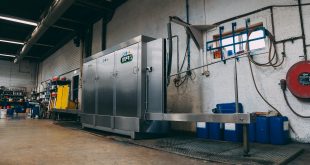
The quality of a transfer depends heavily on powder application and curing. Reliable shaker and dryer units play a vital role in ensuring consistent durability, production flow and garment feel.
For businesses producing DTF regularly, finishing equipment should be viewed as an essential part of the workflow rather than an optional extra. Well-matched systems reduce operator guesswork and help ensure transfers perform consistently after repeated washing.
Support adds long-term value
Although DTF is relatively straightforward to operate, it still requires training, maintenance and effective process control. Technical support should therefore form an important part of any purchasing decision.
A knowledgeable supplier should provide guidance on installation, workflow optimisation, consumables, maintenance and colour management. As customers increasingly expect accurate brand colours and repeatable results, consistent colour reproduction can become a valuable competitive advantage.
Choosing DTF equipment should be based on long-term production requirements rather than headline specifications. Reliability, running costs, workflow integration, finishing equipment and supplier support all play an important role in profitability.
For many garment decorators, a proven CMYK plus white system from an established manufacturer, supported by reliable finishing equipment and expert technical advice, remains the strongest investment. DTF offers excellent commercial opportunities, but long-term success depends on choosing equipment designed for consistent, efficient production.