 Printwear & Promotion The Total Promotional Package

With garment personalisation booming within the industry, companies like Antigro Designer are becoming more integral with their print and design software. Assistant editor Benjamin Austin quizzed Marcin Majda, CEO of Antigro Designer, about the significance of the market’s growth and what it means for the industry as a whole.
“Self-expression is a hallmark of an artist, of art, to get something off one’s chest, to sing one’s song.”
These are the words of the great American comic George Carlin. Self-expression is in our nature and is a big part of what makes us human.
Whether it’s expressing a sense of belonging to a group or highlighting a unique feature about one’s personality, it is something that is growing evermore present in today’s society.
Self-expression is even having an impact on the garment industry, with the market for personalised clothing seeing an increase in the last few years.
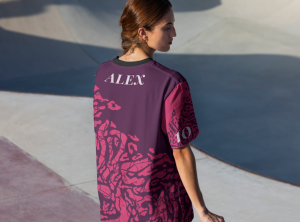
Clothing and fashion have always been key to a person’s identity, but now the garment printing industry is tapping into this market growth.
Companies are offering greater personalisation options than before to meet the social demand.
This means software like Antigro Designer, which provides businesses with personalisation solutions, is at the forefront of the market’s custom garment growth.
Speaking with the CEO and co-founder, Marcin Majda, he said: “Demand for personalised and custom products shows no signs of slowing. Consumers want to stand out and feel unique in their style. This is creating a lucrative opportunity for print service providers that are able to tap into this demand.
“It’s no longer enough to simply change the colour of a piece of clothing or add a name, and as demand for personalisation continues, we expect consumers to seek out even more creative and complex personalisation options to add to their wardrobes.
“It reflects the wider shift in fashion away from mass production and towards more unique, consumer-led designs.”
It also benefits financially to offer personalisation, as according to research carried out by Accenture, 84% of consumers are willing to pay more for personalised clothing.
Marcin continued: “Print businesses need to give consumers and print buyers what they want – printed products that are unusual, innovative, high-quality, as well as creative and fun.
“Personalised clothing allows people to express their individuality, creativity and style through what they wear.
“With today’s consumers increasingly seeking individuality, self-expression, and unique items, garment personalisation is already becoming more than just a trend and is becoming an expectation.
“While mass production won’t disappear overnight, we expect personalisation to continue making its way into the mainstream and become more widely utilised.”
Gaining traction
But where is this growth coming from? Well, Marcin believes it is the influence of new, growing markets that is pushing this demand for individuality.
He said: “In the UK and Europe, the strongest growth in personalised garments is coming from markets where individuality and exclusivity are key drivers.
“Social media and influencer marketing are fuelling demand for branded and custom apparel, with businesses keen to create limited-edition pieces and event collaborations that generate buzz and online engagement.
“There is also growing demand in areas such as corporate workwear, sports teams, and promotional merchandise, where personalisation adds value and differentiation.”
The greener choice
Another benefit to personalisation is its impact on sustainable practices. With 70% of global consumers already purchasing or having already purchased sustainable clothing, according to the findings of YouGov in 2024, there is a clear demand for it.
Marcin explained: “Personalisation is well placed to meet these growing demands for sustainable garments due to the very nature of it being print-on-demand.
“With personalised clothing, only the item that has been designed and ordered will be produced, and this removes huge amounts of waste and excess stock traditionally associated with the mass production of clothing.
“Instead of producing garments in bulk that may never be sold, every item is created only once an order is placed, drastically reducing waste.”
Pushing the boundaries
Personalisation is at the forefront of technology, integrating a plethora of software advances to help non-graphic designers create the garment they have always dreamed of.
Components like AI and 3D visualisers help envision the final product while making the steps easy and intuitive.

Companies like Antigro Designer are helping PSPs offer garment personalisation as a viable option for their customers while relieving a lot of the stress of software integration.
Sassy Spirit and Design is one such company that was struggling to manage the design stage of creating gang sheets, offering the service in-house. This proved very time-consuming and complicated, and they needed a system that allowed the client to control their projects.
Marcin said: “By partnering with Antigro, clients now have the ability to upload, size and duplicate all their designs as needed, and Antigro’s DTF Gang Sheet Builder software has saved the business an immense amount of time, allowing them to focus instead on printing and maintaining fast turnaround times.”
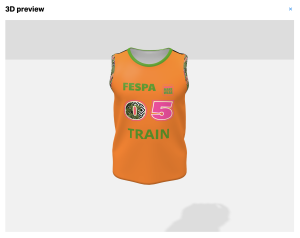
Antigro offers more options within its software with its 3D Product Preview within its Print Customizer tool, helping users see in detail their designs, allowing them to enhance, rotate and zoom into an image of the garment so they can see exactly how each colour or shape would appear.
Marcin said: “A print personalisation software like Antigro’s fits seamlessly into the wider workflow of a print or garment business by acting as the bridge between customer creativity and production.
“By integrating smoothly with existing sales channels, Antigro tools become a central part of the print workflow, helping businesses boost efficiency, reduce waste, and deliver customised apparel at scale.
Trending techniques
It’s the combination of self-expression, sustainability and responsiveness to trends that has cemented garment personalisation as a key factor in the fashion industry’s growth. It is a part of the industry that doesn’t seem to show any sign of slowing down, and thanks to companies like Antigro Designers, it is putting the power back in the hands of the customer while relieving a lot of the legwork from the producer.
The world is a loud one. Everyone is screaming into a sea of voices, hoping theirs is heard. Individuality is expressed almost everywhere, with everyone looking to stand out from the pack. Garment personalisation is a big factor in this, and so it’s best to follow the trends because it seems individuality is here to stay.