 Printwear & Promotion The Total Promotional Package
Madeira UK’s marketing manager, Natalie Greetham, outlines how you can establish the right balance required for consistent, reliable and attractive embroidery results.
Balance is important in all areas of our lives and embroidery is no exception. Beautiful designs, clear logos, and amazing works of art can be produced when the right balance is struck.
Achieving optimal results requires balance across every aspect of the embroidery process because when things are ‘off balance’, problems can start to occur.
The Madeira team frequently receive calls from customers seeking advice about common embroidery problems such as puckering, threads breaking or birdnesting, where threads bunch up caught between the back of the embroidery and the needle plate. There are no quick or easy answers, there can be several culprits so you must look at the whole embroidery process to assess where things might be out of balance.
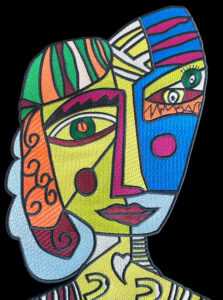
No quick or easy answers
One of the first things we always suggest is to change your needles. It’s surprising how many embroiderers do not have a set schedule for changing machine needles, it’s quick, inexpensive and may just do the trick!
If the problem is recurring at the same point in a design, then it might be the digitising that needs altering. It’s important to always notify your digitiser of the fabric being embroidered and the weight of thread being used because the same design may not translate successfully on all fabric types. For example, if you’re doing schoolwear or corporate logos onto multiple garments from blazers and polo shirts to hoodies and sports kit these fabrics can vary greatly in quality and stability. This is where choosing the correct weight of backing also needs to be considered. To avoid puckering the fabric must be stabilised sufficiently, the lighter the fabric the heavier the backing needed to support and stabilise the garment. Madeira’s cut away Weblon is a go-to backing for many embroiderers, a game changer particularly for stretchy sports fabrics.

Poor tension settings can cause multiple issues such as looping, puckering, birdnesting, uneven stitches and thread breaks. For most embroidery tasks, your machine’s default tension settings will be sufficient. However, overtime you might notice changes in the stitching that could point to tension problems. Altering tensions requires a certain amount of trial and error and will vary depending on your machine brand. A handy gadget for setting thread tensions is the TOWA digital gauge, it’s accurate, easy to use and measures both top and bobbin thread.
The amount of tension needed will differ depending on the thread type, i.e., rayon, polyester, metallic or more specialist threads such as fire resistant or reflective. In general, the thicker the thread the tighter the top tension should be to run well. Machine speed will also have an effect, the faster the speed, the more precise the tension settings must be. Prior to beginning any job consult with the thread manufacturer’s guidelines.
Guideline settings for top thread tensions:
- Rayon 40 – 150gf (gram force)
- Polyester 40 – 170gf
- Metallic – 180 gf
- Thicker wool blends – 190gf
Guideline settings for bobbin tensions:
- Everyday embroidery – between 22gf – 24gf
- Cap embroidery – 25gf
(These numbers are only a guide and may need to be adjusted up or down depending upon your specific machine).
It’s best to start by adjusting the bobbin tension and remember less is more, a quarter turn at a time is recommended, turn left to loosen and right to tighten.
You’ll know the tension is perfect when you have 1/3 bobbin thread to 2/3 top thread visible underneath. More white bobbin thread visible on the back of the embroidery indicates the top tension is too tight. It’s a good idea to run a tension test on your machine periodically as tensions can alter over time.
It’s also advisable to inspect the thread path and bobbin case to confirm your machine is threaded properly and the bobbin case is free from lint build-up, overtime this could affect tensions and the smooth running of the machine.
Always ensure you are using the correct size needle for the thread type and that the needle is inserted correctly with the groove facing the front.
By following some of these troubleshooting suggestions, you should be able to establish the right balance required for more consistent, reliable, and attractive embroidery results.


