 Printwear & Promotion The Total Promotional Package
As the direct to film process matures, higher standards are anticipated. The DTF process is creeping into the precision colour field, using a process normally associated with litho printing and other high end inkjet systems. Colin Marsh, managing director of Resolute, reports.
Until recently, I to felt spot colours were unnecessary for textile prints created by DTF transfers.
With my background in litho printing, I understand the process and benefits of using spot colours very well. Over the years I have mixed hundreds of Pantone spot colours from the 18 base colours to match corporate logos.
Using spot colours in digital printing is nothing new, but correct application involves a complex setup and relies on a specific ICC profile to ensure colour accuracy and consistency. An ICC profile is a data set that characterises a colour input or output device, or a colour space, according to standards set by the International Colour Consortium (ICC). These profiles manage and correct colours so that the final print matches the original design as closely as possible. Every DTF ink brand will have a different base cyan, magenta, yellow and black shade, this is also true for the spot colours. The ICC profile brings these back to an industry standard allowing for more consistent colours.
A challenge
Generating an ICC profile for DTF consisting of CMYKRGBO, which includes spot red, green, blue and orange (RGBO) is challenging.
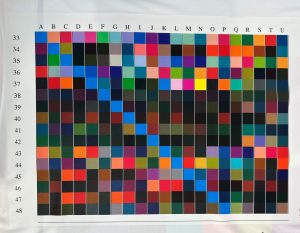
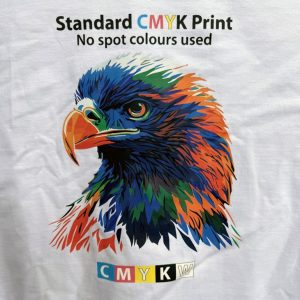
Entry-level spectrometers like the NIX or i1 Studio cannot create such complex profiles; high-end spectrometers costing thousands of pounds with robotic arms are preferred to scan the thousands of swatches produced during this kind of profile creation. Nonetheless, the results are impressive when comparing standard CMYK prints to those produced with a CMYKRGBO device.
The team at Resolute’s R&D centre recently scanned no less than 4,200 different spot colour blend combinations to create the ICC profile used in the example image for this article.
Spot colours can be used in DTF in two ways: with a vector file or layered tiff file, you can allocate a spot colour to a section of the artwork. If the spot colour mapping between the file and the RIP is correct, that portion of the image will print in the designated spot colour. This method can be time consuming and restricted to certain file types. Despite the complexity, the results are often stunning, as seen in the comparison images. The image on the left has a much higher level of vibrancy, often desired in this type of image.

Enhancement
Alternatively, creating an ICC profile that automatically blends RGBO spot colours with CMYK enhances any imported artwork. This process uses all eight colours to produce vibrant, accurate prints without the need to alter the artwork. Both allocated spot colours and blended spot colours can be used in the same image if necessary for specific parts, like a corporate logo that needs to be printed in a designated Pantone spot colour.
Mixing specific spot digital colours differs from litho printing, as only eight base colours are used for the digital spot colour instead of the 18 available for litho printing. Professional tools from the Pantone Connect range offer CIE LAB values, this is crucial for ensuring colour accuracy and consistency across devices and media. The LAB colour space describes all the colours visible to the human eye.
In digital printing, graphic design, photography, and related fields, LAB values ensure precise colour matching. Scanning a specific colour in a Pantone book provides LAB values that can be input into artwork or directly into the RIP. Although challenging, modern graphic designers must master this skill for accurate colour matching. Smaller devices, like the NIX Spectro range, allow scanning from a pantone book to LAB value at lower costs than professional robotic spectrometers. It is crucial to make sure you are scanning from the correct Pantone colour book, as there are many for different print processes.
The LAB colour space explained:
- L (lightness): Ranges from 0 (black) to 100 (white) and determines brightness.
- A: Represents the colour’s position between red/ magenta (positive values) and green (negative values).
- B: Represents the colour’s position between yellow (positive values) and blue (negative values).
Quick and straightforward
A spot colour blended ICC profile in your RIP provides a quick and straightforward way to achieve improved colour accuracy.
However, an ICC profile is media specific. A complex ICC profile created for a particular DTF media may not be accurate on different media. Switching between DTF films and inks can disrupt colour accuracy. For consistent colour quality, use a reputable brand that is readily available. These may not be the most economical, and slight batch to batch changes may occur, but the seller should provide support for any issues. In some cases, offering an updated ICC profile for a specific batch or new product.
Colour support tips
Do you actually need an eight-colour DTF system? In time we will see these high-end printers becoming the norm as our expectations push the DTF process further and further.
Clients will start requesting better colour matching which will only be achievable with an eight-colour system.
How does an eight-colour DTF printer differ in looks? From the front, there are not really any distinguishing differences between a standard CMYK and a CMYKRGBO system. On this R-Jet PRO V4 HG the digital ink management system looks a little more complex, but in general most brands of eight-colour DTF printers will look the same from the front.
However, the printers are physically different with more ink channels in the colour print heads but still only require the same number of white channels and ink. From the back, you can see they have additional ink bottles to hold the extra colours.

Ensure you purchase DTF consumables from a supplier that offers technical advice and support. It is essential to choose a supplier with the correct resources allowing them to support your business correctly.
Buying DTF film and inks from a company that does not sell or support DTF printers and the RIP software can leave you high and dry when you need help. Buying cheaper alternatives can lead to expensive mistakes and a lot of unnecessary stress for the sake of a few pence per metre saving!
Supporting colour accuracy requires extensive experience and the right equipment. I have 45 years in the printing industry, and I am still continuously learning!
I feel sharing knowledge about colour management and optimising DTF prints is beneficial to all. Therefore, I would encourage anyone to reach out to me for help with colour or just DTF in general, I am happy to help, share and advise wherever possible.