 Printwear & Promotion The Total Promotional Package
The T shirt printing sector looks to be one of the most exciting growth areas for operations looking to expand their production possibilities. Phil McMullin, head of pro graphics sales, Epson (UK), provides some simple steps for printing to a T.
ResearchAndMarkets, the Dublin-based market research specialist, recently predicted that the global custom T shirt printing market size will grow at a CAGR of 9.9% from 2022 to 2030 to reach USD 9.18 billion (€8.48 billion) by 2030.
It said this growth is being driven by an increased preference for fashionable, customised, and unique clothing, as well as rising disposable income within the young population as it allows them to design a T shirt matching their style, personality, and preference.
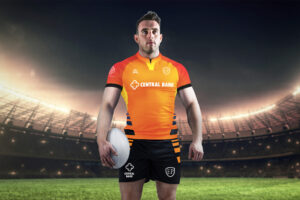
Customised sportswear and gym clothes are also becoming more popular as the athleisure trend gains momentum. Sports teams and clubs worldwide have increasingly adopted custom-designed jerseys and T shirts featuring their unique logo, design and sports-related insignia. Countries such as Germany, China, and India are witnessing significant growth as a result of this.
The report said increasing awareness about the easy use of innovative designs has also encouraged the sportswear industry to more readily adopt sublimation. It is also a fast, cost effective and sustainable printing process.
Personalised textiles
Driving growth, too, is the fact that more than a third of consumers are interested in personalised textile products and will pay a premium for them according to Smithers’ The Future of Digital Textile Printing to 2026 survey. It predicted digital textile printed volume will increase 13.9% CAGR from 2021 to 2026, to reach 5.531 million square meters annually.
The broader dye sublimation printing market is reportedly expected to grow at a compound annual growth rate (CAGR) of 9.9% to reach €14.1 billion in 2027 says The Future of Dye Sublimation Printing to 2027 from Smithers. It found, in 2022, the world market reached a projected €8.8 billion, inclusive of printing to hard surfaces, which accounted for some 44% of that figure. Among the drivers it highlighted were the increasing use of web-based print commissioning, and the desire to reshore and localise textile supply chains. For 2022 total demand for dye sub printing of apparel was €3.78 billion and it has one of the strongest growth predications through to 2027.
Easy to adopt
Fortunately, for operations looking to capitalise on this exciting opportunity, sublimation printing is an easy process to adopt, enabling operations to offer a wide range of applications in house, on demand, and in a timely manner. It generally requires just a printer and a way to fix the image such as a heat press or a calendar.
Producing high quality vibrant prints is a simple step by step process. First print the high-resolution image on standard multi-purpose paper, mirroring it if there is text. Adhesive or photo media can be used for different applications. Lay the garment out and use the heat press to remove any wrinkles. Centre the image. Lay a silicone parchment sheet on top. Then use the heat press with medium to hard pressure remembering that key to a good dye sublimation print is time, temperature and pressure. Reset if necessary. Apply 200°C for 60 seconds to transform the dye from a solid to a gas to transfer the print.
The printing stage of the process can be completed quickly and to a high quality by a number of Epson solutions including the Epson SureColor SC-F6400. The up to 680sq ft/hr 44in printer is perfect for the production of high-quality fabric sportswear, apparel, promotional items, soft signage and accessories. There is also Epson’s first A4 dye sublimation printer, the SureColor SC-F100, which is perfect for producing promotional goods and personalised gifts and other small merchandise items.