 Printwear & Promotion The Total Promotional Package
The famous phrase ‘time is money’ is applicable in all walks of life. Sometimes, instead of adding more to a workflow, it may be better to look at being more efficient. Andy Rogers, marketing director at Stahls’ UK, explains how revising your workflow could benefit your business in 2026.
When was the last time you really audited your workflow?
Transfer printing remains one of the fastest and most cost-effective ways to decorate garments – but efficiency isn’t automatic. In fact, many decorators are leaving productivity – and profit – on the table simply by not measuring their process.
At Printwear & Promotion LIVE! This year, I asked the audience a simple question: “Do you know exactly how long it takes to fuse a T shirt?” Shockingly, a large number of attendees didn’t. For context, the average fusing time is just 41 seconds. Knowing this number is the first step toward unlocking real gains in your business.
Identify hidden time wasters
Take a hard look at your habits. How many steps in your workflow exist because “we’ve always done it that way”?
One common culprit is unnecessary re-pressing after peeling the transfer carrier. This can add five to 10 seconds per garment without improving the print. High-quality heat transfers only require a short pre-press (3-5 seconds), followed by the main press (10-12 seconds, depending on transfer type).
Eliminating extra steps isn’t just theoretical – it can reduce fusing time by 30-50%, cutting turnaround times and freeing up capacity.
Small gains multiply
Even tiny time savings can scale dramatically. One UK decorator we worked with had two operators spending 20–30 seconds double-checking placement on each shirt for a diagonal design. With 100 shirts per day, that added up to 46 lost days per operator each year.
After implementing a proper laser-guided alignment workflow, placement time dropped from 30 seconds to just 5 seconds per garment – saving 36 days per operator annually. Imagine what your business could achieve with that extra capacity.
How to Audit Your Process
- Empower your team – Productivity audits work best when operators are involved. Make it a collaborative effort – they’ll often have insights you haven’t considered.
- Benchmark your workflow – Pick your most common garment and transfer combinations and time every step with a stopwatch. This is your baseline.
- Spot inefficiencies – Compare each step against the recommended fusing instructions. Even a 5-second improvement per shirt adds up quickly over hundreds of garments.
- Optimise your equipment – Small enhancements can make a big difference:
- Quick slip covers for your bottom platen can shave 11 seconds per garment.
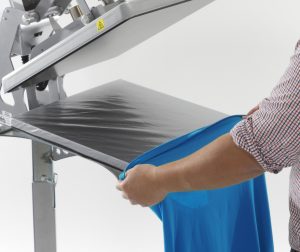
- Threadable press stands save another five seconds per shirt.
For decorators fusing 500 garments daily, these optimisations can translate to more than 50 working days saved per operator annually.
The 2026 Mindset
Every second counts when you’re working with transfers. By auditing your workflow, eliminating unnecessary steps, and optimising your equipment, you’re not just saving time – you’re increasing capacity, reducing stress, and boosting your bottom line.
2026 is the year to stop guessing and start measuring. When you know your numbers, you can make meaningful gains every single day.