 Printwear & Promotion The Total Promotional Package
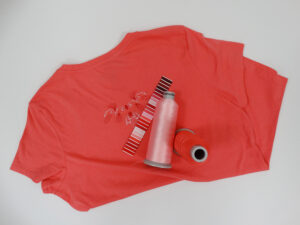
T shirts are one of the most versatile items of clothing and can easily be customised with an embroidered design or logo, however, the quality and stretch of T shirt fabric can vary greatly. To ensure you achieve the best possible results, Natalie Greetham, marketing manager at Madeira UK, shares some simple steps to consider.
Embroideries on stretchy fabrics can be prone to puckering meaning the design will not lie flat once it’s removed from the hoop. Selecting the right stabiliser is the first step.
The stabiliser’s job is to stop the T shirt from stretching out of shape and support the fabric during embroidery. Cut-away or stable heavyweight tear-away backings are the best options. If the garment is very thin, then a ‘no-show’ backing such as Weblon is ideal, designed to offer enough support for the embroidery while not being visible through the fabric.
Important roles
Although small, needles play an important role when it comes to successful embroidery. One of the most important things you can do, and an inexpensive way to improve embroidery quality, is to change them regularly! For knitted stretchy fabrics always use a ball point needle in the smallest size for the weight of thread being used. For example, with standard 40 weight thread a size 65 needle is recommended, large enough for the thread to easily pass through while minimising the size of the hole made through the fabric.
Always make your digitiser aware of the type of fabric a design will be embroidered on to so they can make the necessary adjustments. We’ve all seen ‘bullet-proof’ embroidery with too many stitches on fabric that can’t support it, this causes the design to fall forward and is uncomfortable for the wearer. Start and end points are also important. Rather than stitching random sections from left to right, start in the centre of the design and embroider outwards then finish stitching towards the centre again, this will help the design to lie flat.
Do not over stretch
While the fabric should be taut like a drum in the hoop, it is important not to over stretch it. Another problem you may have encountered and one that T shirt fabrics are prone to is ‘hoop burn’, when the embroidery is removed from the hoop leaving a visible mark on the fabric. This is caused by the fabric being so tight in the frame that all the moisture is squeezed out of that area, these marks can be removed by spritzing with a little water and then being left to air dry or by carefully using steam.
Another option is to minimise the risk of hoop burn in the first place by using a magnetic frame. With a magnetic frame the fabric is ‘sandwiched’ between the two rings, rather than being compressed, the fabric isn’t over stretched, and a hoop mark is far less likely. Magnetic frames can also be used in conjunction with a framing station board which will significantly speed up large production runs by ensuring accurate and consistent right or left chest placement time after time.
Consider your thread choice, while polyester threads are known for their bleach resistant properties, durability and strength, these features are not always necessary. Using flexible rayon threads will produce a much softer finish. Many T shirts are made from organic cotton and embroiderers are seeking environmentally friendly threads. Madeira’s new Sensa Green threads in 144 colours, tick this box. Sensa Green threads are made from natural lyocell fibres sourced from trees in sustainably managed forests meaning embroideries can now be beautifully soft and sustainable.