 Printwear & Promotion The Total Promotional Package
The speed at which DTF has spread across the globe and turned the decoration industry on its head is quite remarkable. In this article, managing director of Resolute DTF, Colin Marsh discusses the need for a reinvestment plan amid the DTF industry’s rapid evolution.
It’s difficult to not talk about direct to film, if you are involved in a business that offers garment or promotional item decoration. Early adopters of the technology were quick to enjoy the benefits of DTF, but with little knowledge of its longevity many fell foul to what’s now commonly known as the taxi warranty.
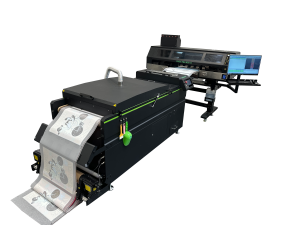
DTF can be entry level with smaller systems producing a few shirts a day, or industrial solutions that can produce up to 200m (20,000 logos) of heat seal transfers per shift. The technology is very similar today as it was three years ago, except the productivity of a commercial DTF system has been increased to incredible levels, but be cautious.
High production DTF systems are designed to print at breakneck speeds. This is all very good for production, but it comes at a price, if you do not take into account wear and tear. The simplest way to explain this is to use the taxi warranty situation.
The taxi warranty situation
If a car used by a family averages 12,000 miles a year, a 60,000 mile or five-year warranty sounds great and, in most cases, ample. You would also expect to get a few years use after the warranty expires. If the same vehicle is used as a taxi, the warranty remains the same, but since it is now used to generate income, it will likely clock up more than 60,000 miles over just a few months.
It is fair to say, a car used as a taxi can generate a considerable income and will likely be used by different drivers around the clock seven days a week, maximising profits in a short space of time. The wear and tear on the taxi is accelerated, meaning it will need replacing much quicker than the same model used as a family car.
The same applies for high production DTF printers, water-based and UV. Running a production DTF around the clock will generate considerable profits with the ROI maturing in only a few months. Blinded by souring profits, many companies neglect the fact, the main source of income in their business will wear out and need replacing at some point in the future.
The direct to garment boom
This situation is nothing new and the same taxi warranty situation developed in the direct to garment boom 15 years ago. DTG was very popular and new businesses popped up overnight selling DTG printers and consumables cashing in on this new lucrative process. With little or no experience in this field, the support provided for the end user customer was in some cases inadequate, resulting in the DTF process leaving a bad taste for some companies.
Life span should be taken into account for any piece of commercial equipment, not just DTF, but for some reason DTF printers seem to have slipped through this calculation. Reinvesting in technology is a crucial part of any business which heavily relies on a piece of equipment.
Over the last few years, I have unfortunately seen quite a few new start businesses, who have been blinded by profits, neglect the fact the momentum will stop if you do not have a plan to replace the one piece of equipment that fuels the momentum.
Coming up with a reinvestment plan
The good news is, it only takes a few pence per metre to create a reinvestment plan. Doing this ensures you can purchase the latest DTF equipment that takes your fancy when the time comes. Extensive down time, when a DTF printer simply cannot go on, is the most expensive hourly rate in any business and it should be avoided at all costs. The quicker you make money, the quicker you can lose money.
Using the simple calculation of just 15p per metre, will save enough cash to replace most DTF systems without the need to raise finance. Using this method of reinvestment also combats the taxi warranty situation. The faster and more substantial the output, the quicker your investment plan matures. This means you are ahead of any issues, financially, and can continue to grow your business without generating a cashflow crisis.