 Printwear & Promotion The Total Promotional Package
Garments have progressively changed over the years, becoming just that much harder to use for embroidery. But if you didn’t have to. Owner of the Embroidery Academy, Liz Woodhouse, suggests perhaps the solution to some thread problems is removing the thread altogether.
Having spent more than 35 years in the garment decoration industry, I’ve seen fabrics change dramatically. Years ago, most garments we embroidered were relatively straightforward: cotton polos, sweatshirts, workwear and heavier fabrics that behaved predictably in the hoop. Today, it’s a very different story.
Modern apparel is packed with technical fabrics designed for performance, comfort and style. From lightweight sportswear and softshell jackets to highly stretchable athleisure garments, manufacturers are constantly developing materials that feel great to wear. The challenge is that many of these fabrics weren’t designed with embroidery in mind.
Traditional embroidery remains one of the most prestigious and durable forms of garment decoration available. There’s no denying the premium look and feel that a well-stitched logo can provide. However, achieving that result on modern technical fabrics can sometimes be easier said than done.
Bucking the trend
As many embroiderers will know, embroidery relies on stabilising the garment in a hoop and driving thousands of needle penetrations through the fabric. While this works exceptionally well on many materials, lightweight and stretch fabrics can present real challenges. Stretch garments can distort during hooping, thin fabrics may struggle to support dense stitch counts, and certain technical materials simply don’t respond well to repeated needle penetrations.
The symptoms are all too familiar: puckering around the design, fabric distortion, visible needle marks, and in some cases permanent damage to the garment itself. Over the years, I’ve spent countless hours testing different backings, adjusting tensions, modifying stitch densities and experimenting with digitising techniques to overcome these issues. Sometimes the results are excellent. Sometimes the fabric simply wins.
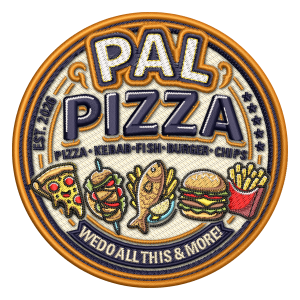
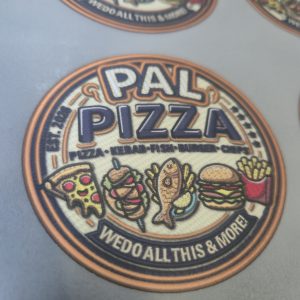 This is where simulated embroidery DTF transfers are starting to attract serious attention.
The technology has evolved significantly in recent years, and the latest simulated embroidery transfers do a remarkably good job of recreating the appearance and texture of traditional embroidery. From a short distance, many people would struggle to tell the difference. More importantly, the decoration can be applied without a single needle passing through the garment.
For technical fabrics, this brings some obvious advantages. There is no risk of needle damage, no hoop burn, and no stitch-induced puckering. The garment remains in its natural state while still benefiting from a premium embroidered appearance. Fine details, small text and intricate designs can also be reproduced consistently, regardless of the fabric construction underneath.
Supplementary, not instead of
That doesn’t mean simulated embroidery DTF is replacing traditional embroidery. Far from it. In my view, embroidery will always have its place and remains the preferred option for many garments and applications. However, as decorators, our job is to choose the most suitable decoration method for the garment in front of us rather than forcing every garment through the same process.
 There is also a strong commercial argument for considering simulated embroidery DTF.
Take lower-value garments such as hi-vis vests, lightweight workwear or promotional clothing. By the time a garment has been hooped, loaded onto a machine, embroidered and removed, you may have invested 10 to 15 minutes of labour into a relatively inexpensive item. When you’re producing larger volumes, those minutes quickly add up.
A simulated embroidery DTF transfer, on the other hand, can often be applied in seconds while still delivering the premium look customers expect. The reduction in production time can significantly improve efficiency, increase throughput and reduce labour costs without compromising the perceived quality of the finished garment.
After more than three decades in this industry, one thing I’ve learned is that there is rarely a single solution to every decoration challenge. The best decorators are the ones who adapt as garments, fabrics and technologies evolve.
As technical fabrics continue to advance, simulated embroidery DTF is becoming another valuable tool in the decorator’s toolbox. It won’t replace embroidery, but for certain garments and applications, it may well be the smarter, more profitable and more practical solution.