 Printwear & Promotion The Total Promotional Package
With any process, practice makes perfect, but it doesn’t hurt to gain some guidance along the way. CEO and founder of Virus Inks, Beppe Quaglia has given her top 10 tips on how to best move forward as a screen printing business.
The gap between craft and scalable business isn’t about fancy equipment. It’s the small decisions that compound over months. Here’s what moved the needle – not theory, just what worked Monday morning.
 1. Equipment mobility opens doors
A Manchester shop bought a compact six-colour carousel specifically because it fit in a van. Within six months, he was printing live at football matches and festivals. Production became experiential – people watched shirts being made, asked questions, ordered on the spot. His brand recall exploded, not from ads, but from physical presence where customers gathered.
2. Local partnerships beat traditional marketing
We partnered with three local bands – printed their merch at cost for wearing our branded samples. £200 in materials generated £8,000+ in orders over the next year. Their audiences saw quality firsthand, not photoshopped ads. One behind-the-scenes printing video brought more qualified leads than six months of Facebook ads.
3. Manual skills before automation
 We hired an operator who’d only used automatics. Decent speed, terrible awareness. Couldn’t spot registration drift or diagnose problems when the auto failed. Every high-performing operator I’ve worked with learned manual first – they understand why squeegee angle matters, not just that the machine is set to 45°. Our manual-trained operators run automatics at 500 to 600 shirts/hour with consistent quality. The auto-only hire peaked at 400/hour with higher rejects.
4. Professional training pays back fast
We launched without training. Cost us six weeks of errors and £2,000 in waste. A competitor invested £1,800 in a three-day intensive – their first production run was profitable. Typical manual operator hits 50 to 80 shirts/hour. After training, 80 to 120/hour isn’t uncommon. That 40% throughput increase pays for the course in a month.
5. Colour tools eliminate disputes
 Years of matching by eye under shop lights meant customers approved prints, then rejected them in daylight. Bought a basic spectrophotometer (£300 to £600 for entry units like 3NH). Disputes dropped to nearly zero because we showed objective ΔE values. We aim for under 1.5 – most eyes can’t detect differences under 2.0. Conversations shifted from “looks wrong” to “measurement says 1.2 ΔE.”
6. Pre-treatment prevents problems
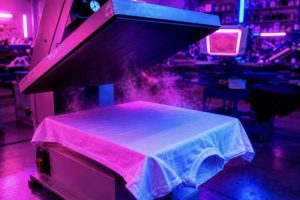
We heat-press every garment 5 to 8 seconds before printing – removes moisture fabric absorbs from air. Water-based inks adhere better; flash times are predictable, fewer adhesion failures. Cost: zero, we already have presses. Time: three seconds per shirt. Problems prevented: hundreds of rejects over two years.
7. Customer delight costs less than you think
 We include one extra shirt per order, never mentioned in quotes. Costs £3 to £5, generates massive surprise. Customers mention it to colleagues, tag us socially, reorder faster. Also: quick loom videos showing their order printing (90 seconds), personally delivering key orders, calling instead of emailing. Not revolutionary – just treating customers like humans.
8. In-house production changes economics
A friend outsourced printing for three years. Added basic manual setup (£8,000). Before: £4,500/month revenue, £1,200 profit. After six months: £12,000/month, £6,000+ profit. Margins went from 25% to 50%+. Controlled quality and turnaround. Equipment paid back in 8 months.
9. Mesh selection changes everything
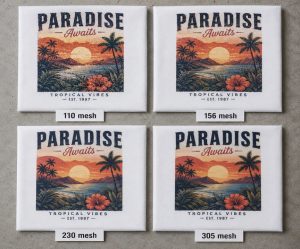
 We printed for years using 156 mesh for everything. “Good enough”, we thought. Then we started matching mesh count to ink type and detail level. 110 for heavy whites, 230 for fine halftones, 305 for process work. Print quality jumped noticeably. Detail reproduction improved, ink deposit became more consistent, customers started commenting on the difference. The mesh investment (£200 to £300 for a variety pack) paid back in reduced remakes and higher-end work we could suddenly quote on.
10. Specialisation beats everything
Early on we tried being everything: screen print, embroidery, vinyl, promo. Exhausting and unprofitable. We narrowed to premium screen printing for independent brands. Turned away non-fit work – terrifying at first. Reputation grew fast, referrals increased, pricing power improved. Saying no is hard, but serving everyone means excelling at nothing.
What matters
This isn’t about the latest gear or biggest shop. It’s knowing your process, investing in skills before equipment, building compounding relationships. Successful printers obsess over fundamentals: perfect registration, consistent colour, reliable delivery.
Start with craft. Add business around it.