 Printwear & Promotion The Total Promotional Package

Liz Woodhouse of The Embroidery Academy shares how using the stitched detail of embroidery can provide a lift to your DTF and DTG prints.
Enhancing DTF (direct to film) or DTG (direct to garment) prints with embroidery can create stunning, textured apparel that combines the best of digital and tactile techniques.
But why should you combine the two?
DTF and DTG are both excellent for producing vibrant, detailed graphics directly on fabric. DTF delivers bold colour and works well across a variety of materials, while DTG offers a soft, natural feel, especially on cotton-rich garments.
But despite their visual impact, both methods are inherently flat. That’s where embroidery comes in. Adding stitched details brings your design to life with texture, depth, and a tactile quality that instantly elevates the piece. Even subtle embroidery accents can transform a standard print into something that feels custom, premium, and worthy of a higher price point.
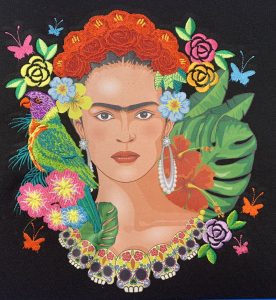
How to combine them effectively
- Start your design with a clear plan. Know which elements will be printed and which will be stitched. This upfront decision shapes the entire workflow. Identify areas where print can deliver rich colour or fine detail, and where embroidery can add texture, emphasis, or depth. Designing with both techniques in mind from the beginning ensures the two mediums complement each other rather than compete.
- Keep your print layers clean and your embroidery zones clearly marked in vector form. Avoid putting embroidery over super heavy ink areas as you may see the needle penetrations in the image or puckering.
- Use registration marks or alignment guides to keep everything in place. Their purpose is to help you line up the printed design with the embroidery exactly where you want it. Without accurate alignment, your embroidery could end up slightly off-centre, crooked, or not properly lined up with the printed elements, which can ruin the final look of the garment. Even being off by a few millimetres can be noticeable, especially if you’re stitching over part of the printed design.
- Don’t go overboard. The key is to pick your spots, like adding embroidery to logos, lettering, or focal points within a printed graphic. For example, if you’ve got a printed dragon, you could embroider the eyes or some scales texture to bring it to life.
- Threads and inks don’t always match exactly. So, either match them closely for a clean look, or go bold and contrast for visual impact.
Print first, stitch second. Always apply your DTF or DTG print before doing any embroidery.
- Embroidering over printed fabric can get tricky. Use appropriate backing and consider magnetic hoops to minimise fabric movement. It’s advisable that the print fits within the hoop to avoid damaging the printed area.
- Use ballpoint needles, this reduces the risk of damaging the fabric or the printed surface, especially important when stitching over inked areas where the fabric integrity may already be slightly compromised.
- Alignment between the print and embroidery needs to be accurate from the very beginning, don’t leave it to guesswork. Plan and position everything with precision right from the start.
- Make sure the printed registration mark is placed exactly under the needle’s starting point. Some embroidery machines come with alignment features that let you use two points along a straight line to fine-tune positioning.
- Always run a trace of the embroidery design before stitching to ensure everything is aligned correctly. If you’re using a laser alignment system, double-check that the laser is properly calibrated and accurately positioned on the machine.
Why not push the design further with specialty threads and techniques?
Try using metallic thread for a touch of shine, matte thread for a more understated finish, or rainbow thread for dynamic colour shifts. Try 3D puff foam to add bold, raised texture. Or incorporate appliqué to introduce layered fabrics, patterns, or textures that add depth and contrast.
In the end, combining digital print with embroidery, takes a bit more planning and precision, but the result is worth it: custom garments that feel crafted, look premium, and leave a lasting impression.